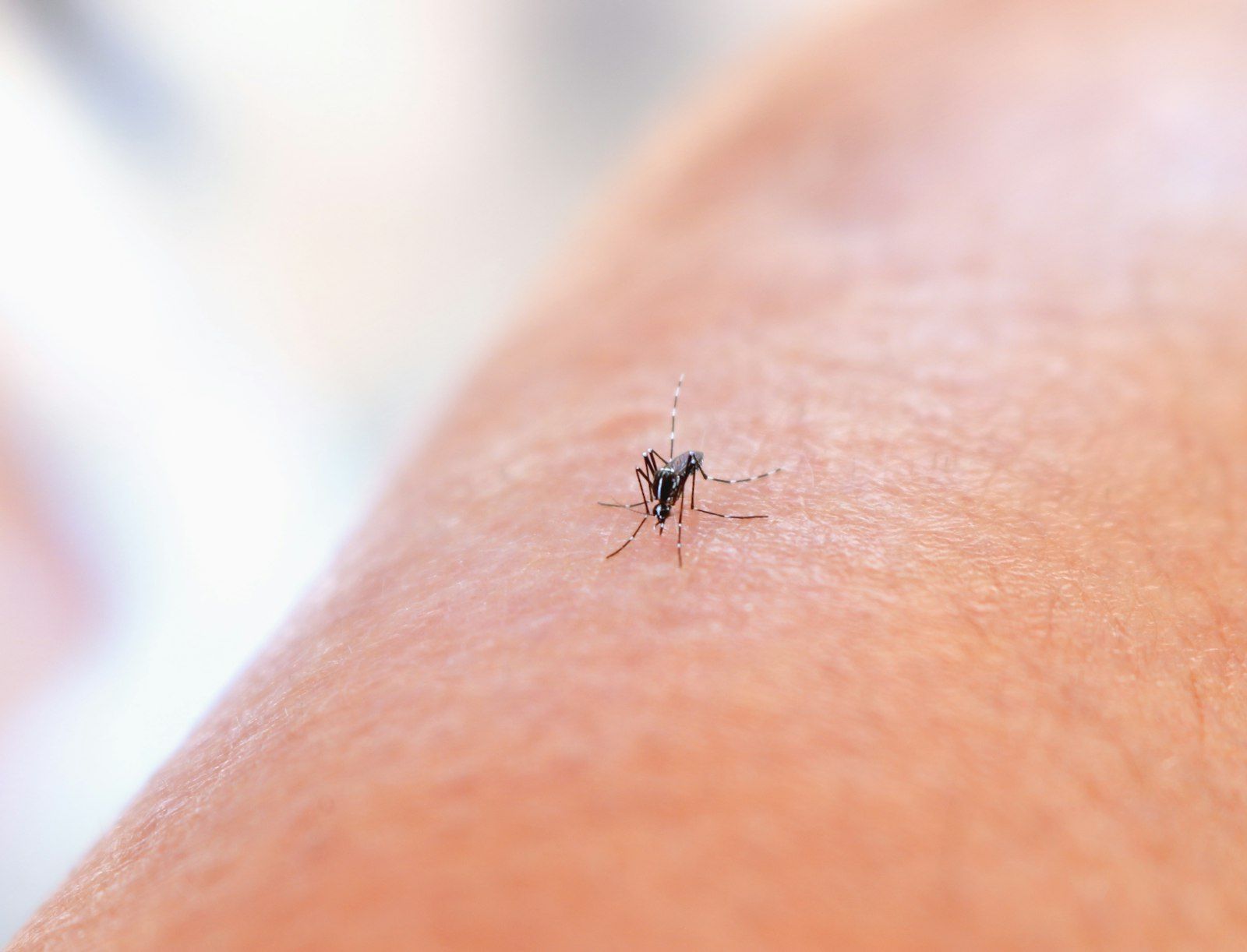
A coordinated rollout of the Butantan single-dose dengue vaccine, Wolbachia releases at biofactory scale, and an ovitrap surveillance network covering 1,600 municipalities reduced Brazil's first-quarter 2026 dengue cases by 75% year-on-year, from 916,400 to 227,500. The result reflects three established tools deployed at national scale at the same time, rather than a single intervention.
In 2024, Brazil logged 6.6 million dengue cases, the highest in its history, and 1.7 million in 2025, with the season opening early.
The 2026 data mark a sharp change. Data released by the Brazilian Ministry of Health and reported by Agência Brasil show a 75% fall. Brazil registered 227,500 probable dengue cases between 1 January and 11 April 2026, against 916,400 in the same period of 2025. The drop covers the first four months of a season forecast to be severe.
The fall is not the work of a single intervention. It reflects three established tools deployed at scale at the same time.
What actually changed
When a disease curve changes direction, it is tempting to credit one prominent intervention. In Brazil's case that intervention is Wolbachia, bacteria-carrying mosquitoes released into cities. The reduction instead reflects three programmes scaled up roughly in parallel.
1. A locally manufactured, single-dose dengue vaccine
The main vaccine is the Instituto Butantan single-dose dengue vaccine, developed in São Paulo and offered in pilot cities in 2026. Two-dose dengue vaccines such as Qdenga require a second dose three months after the first; the Butantan candidate aims to confer protection from a single jab. That difference matters for a country that vaccinates at the scale of a continent.
According to the Ministry, 1.4 million dengue vaccine doses had been applied to children and adolescents aged 10-14 since 2024. In 2026 the ministry began offering the national single-dose vaccine, developed by Instituto Butantan, to three pilot municipalities for ages 12-59. The Ministry has further confirmed that more than 300,000 doses have been administered to health professionals. They are at occupational risk and act as a sentinel population for tracking efficacy.
The vaccine was developed in a country that has lived with dengue for decades, manufactured at home, and priced for public-system rollout. Those features matter for similar health systems elsewhere.
2. Wolbachia at biofactory scale
A second programme is older. The World Mosquito Program works in partnership with Brazil's Fundação Oswaldo Cruz (Fiocruz). For more than a decade it has released mosquitoes infected with the Wolbachia bacterium into Brazilian cities. The bacterium does not harm the mosquito; it reduces the insect's ability to transmit dengue, Zika and chikungunya.
In 2024, Fiocruz and the World Mosquito Program opened what Nature described as the largest Wolbachia mosquito factory in the world. The Curitiba facility produces tens of millions of Wolbachia-carrying Aedes aegypti every week. The Brazilian Ministry of Health has now confirmed that the Wolbachia roll-out is planned for 72 priority municipalities.
The case for Wolbachia rests on trial data. The World Mosquito Program reports that its Yogyakarta trial showed a 77% drop in dengue incidence in treated areas. The Singapore Project Wolbachia trial published in the New England Journal of Medicine reported more than 70% fewer dengue infections in residents of treated areas. Brazil's 2026 result is not proof of Wolbachia in isolation. It is the first time the bacterium has been deployed at population scale in a large tropical country. The results are visible in the national disease curve.
3. The world's largest ovitrap network
The third pillar is the least visible and the one that guides the other two. The Ministry now operates an entomological surveillance network of ovitraps in roughly 1,600 municipalities, with expansion to 2,000 expected by the end of 2026. Ovitraps are simple and cheap. They are black plastic cups that attract gravid female Aedes aegypti. The females lay eggs on a paddle that municipal teams later count under a microscope.
The count tells public-health authorities where the next dengue increase is likely. Vaccinations get scheduled. Wolbachia release schedules get adjusted. Door-to-door larvicide teams get redirected. Without this surveillance backbone, neither the vaccine nor the bacterium would be deployed where they are needed most.
The Ministry is also expanding the sterile-insect technique in pilot cities, releasing irradiated male Aedes to reduce local mosquito populations. It is a fourth tool, not yet a national programme, and worth watching.
Why the result matters beyond Brazil
Three reasons.
First, Europe now records locally acquired dengue. The European Centre for Disease Prevention and Control logged 304 locally acquired cases on the EU mainland in 2024, up from 71 in 2022. Italy, France and Spain report most of them. European health systems have not faced a problem at Brazil's scale, so they have no equivalent programme yet. Brazil combines vaccination, Wolbachia and surveillance at national scale, and European programmes can study that combination.
Second, the result shows the curve can fall. For a decade, commentary on mosquito-borne disease has often treated rising transmission as inevitable. Brazil recorded a 75% reduction in the first four months of 2026 through coordinated work across several tools. The result does not depend on one technology.
Third, the costs are tractable. Brazil's three pillars are not cheap, but none is exotic. Ovitraps cost little. Single-dose, locally manufactured vaccines are tractable to public-system finance. A Mediterranean-scale version of the programme is within reach of existing budgets.
What to watch next
- The full year. The 2026 dengue curve is steep in the first four months. The southern hemisphere's main season ends in May. The test is whether the 75% gap holds through to November, and whether deaths fall in proportion to cases.
- São Paulo, Belo Horizonte, Brasília. The three pilot vaccine cities are the proving ground for whether a single-dose vaccine plus Wolbachia plus surveillance can hold dengue down for two consecutive seasons.
- PAHO's response. Watch for the 2026 Lancet Regional Health Americas coverage and any formal PAHO endorsement of the integrated Brazilian approach. That would show whether other countries can adopt it.
- European pilots. Italy's Emilia-Romagna already runs an integrated arbovirus surveillance plan. A Wolbachia release pilot in a southern European city would be the next step.
What we know
Sources cited
- Agência Brasil, "Casos de dengue no Brasil caem 75% em 2026," April 2026, https://agenciabrasil.ebc.com.br/saude/noticia/2026-04/casos-de-dengue-no-brasil-caem-75-em-2026
- Ministério da Saúde do Brasil, "Brasil reduz casos de dengue em 75% e avança no controle de doenças infecciosas," April 2026, https://web.archive.org/web/20260521012833/https://www.gov.br/saude/pt-br/assuntos/noticias/2026/abril/brasil-reduz-casos-de-dengue-em-75-e-avanca-no-controle-de-doencas-infecciosas
- Nature, "Inside the world's largest Wolbachia mosquito factory," 2025, https://www.nature.com/articles/d41586-025-02857-4
- World Mosquito Program, "Impact of the Wolbachia method", https://www.worldmosquitoprogram.org/en/work/wolbachia-method/impact
- Singapore Project Wolbachia trial, New England Journal of Medicine, 2026, https://www.nejm.org/doi/10.1056/NEJMoa2503304
- Instituto Butantan, https://butantan.gov.br
- European Medicines Agency, "Qdenga (dengue vaccine), EPAR", https://www.ema.europa.eu/en/medicines/human/EPAR/qdenga
- European Centre for Disease Prevention and Control, "Historical data on local transmission of dengue in the EU/EEA", https://www.ecdc.europa.eu/en/all-topics-z/dengue/surveillance-and-disease-data/autochthonous-transmission-dengue-virus-eueea-previous-years
This article is general information, not medical advice. Ask a doctor or pharmacist about your own health.